
Ear wax removal in Rochdale
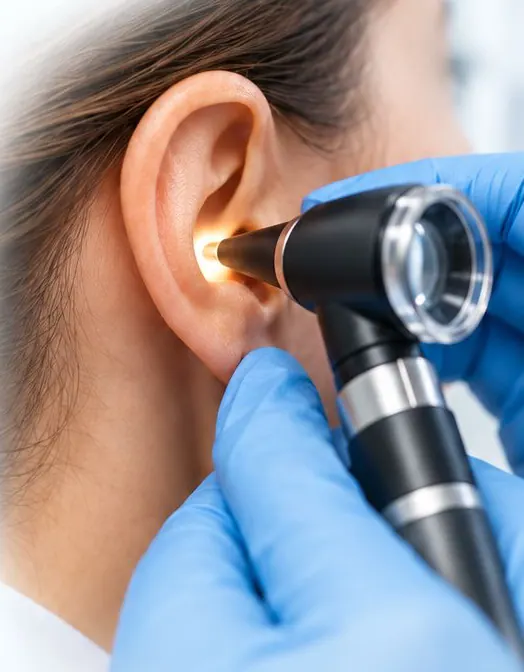
Ear wax removal at Ray's Podiatry uses microsuction: Ray looks into your ear under magnification and lifts the wax out with a fine, low-pressure suction tube, taking some pieces out by hand with small instruments where that's easier. No water goes into your ear. One appointment covers both ears and costs £60, at Castleton Baths 1910 in Rochdale.
It's booked on its own, so you don't need to be a foot care patient or have an initial assessment first.
Updated November 2026 by Ray's Podiatry
- Price, both ears
- £60
Book if you notice
- Your hearing sounds muffled
- Your ear feels full or blocked
- Ringing or buzzing in your ear
- Itching or discomfort inside the ear
- Your hearing aid whistles or sounds less clear
- Olive oil drops haven't cleared it
What’s included
- Both ears checked before and after
- Wax removed by microsuction and by hand
- Advice on keeping your ears clear
What happens
- Step 1
Check
Ray asks about your ears and your health, then looks into both ears to confirm it's wax and check your eardrums.
- Step 2
Remove
Ray lifts the wax out with a fine suction tube while watching under magnification, and takes some pieces out by hand with small instruments. The suction is noisy, but it shouldn't hurt.
- Step 3
Check again
Ray looks again to make sure the ear canal is clear and the skin isn't irritated.
- Step 4
Aftercare
You'll know how to keep your ears clear at home, and when it's worth coming back.
Both ears for £60
At Castleton Baths 1910 in Rochdale. You don’t need a referral or a foot assessment first.
Before your appointment
- For 3 to 5 days before, put 2 or 3 drops of olive oil in each ear, 3 or 4 times a day. It softens the wax so it comes out more easily.
- Ray can only remove ear wax if you have no known damage to your eardrums. If you've ever had a perforated or damaged eardrum, don't use the drops, and see your GP instead.
- Don't use cotton buds. They push wax further in.
- If you wear hearing aids, bring them with you.
When to see a GP instead
See a GP or call 111 instead if you have sudden hearing loss, pain, discharge or bleeding from your ear, a high temperature, or dizziness that won't settle. These can be signs of something other than wax.
Questions about ear wax removal
Does microsuction hurt?
- Most people find it comfortable. The suction is loud because it's close to your ear, and a few people feel briefly dizzy. Tell Ray if anything feels uncomfortable and he'll stop.
How is microsuction different from ear syringing?
- Syringing, now called irrigation, flushes wax out with water. Microsuction uses gentle suction instead, so your ear stays dry and Ray can see the wax as he removes it.
Who carries out the ear wax removal?
- Ray does. As well as being a specialist podiatrist, he has trained in microsuction ear wax removal.
Will my hearing improve straight away?
- If wax was muffling your hearing, most people notice the difference as soon as it's out. If it doesn't improve, Ray will suggest having your hearing checked by your GP or an audiologist.
How often should ears be cleared?
- Only when wax causes problems. Ears clean themselves, and most people never need wax removed. Some people, including many hearing aid users, build it up faster and come back every 6 to 12 months.
Can I have ear wax removed on the NHS?
- Some GP practices still remove ear wax, but many no longer do. If you'd rather try the NHS first, ask your practice.
Do you treat children?
- Yes. Ray sees adults and children of any age for ear wax removal.